
Early childhood education is a vital field that profoundly shapes the development of children aged 1 to 5 years. The experiences and learning opportunities provided during these formative years lay the groundwork for future academic success, social competence, and emotional well-being. This comprehensive guide explores key stages of child development and different types of childcare services available to families in Chilliwack and the surrounding Fraser Valley region. Parents can often feel overwhelmed by the multitude of options and requirements when seeking quality care and education for their little ones. This guide aims to clarify these aspects, providing valuable information on necessary skills for fostering development and making informed childcare choices within the Chilliwack community.
What are the Key Stages of Child Development from 1 to 5 Years?
Developmental Milestones by Age:
- Ages 1-2 Years: Toddlers begin to walk independently, say their first words, and show increasing curiosity about their surroundings. They start to understand simple instructions and engage in parallel play, where they play alongside other children without much interaction. Emotional development includes expressing strong preferences and developing a sense of self.
- Ages 2-3 Years: Children in this age group typically develop more complex language skills, forming short sentences. They become more adept at running, jumping, and climbing. Socially, they begin to engage in more interactive play and show an interest in friendships. Potty training often begins, and they start to understand and express a wider range of emotions.
- Ages 3-4 Years: Preschoolers demonstrate significant advancements in fine motor skills, such as drawing shapes and using scissors. Their vocabulary expands rapidly, and they can tell simple stories. Social play becomes more cooperative, and they learn to share and take turns. Emotionally, they develop empathy and can better regulate their feelings, though tantrums may still occur.
- Ages 4-5 Years: By this age, children are preparing for kindergarten. They can follow multi-step instructions, recognize letters and numbers, and engage in imaginative play with complex scenarios. Physically, they refine their coordination and balance. Socially, they form strong friendships and understand social rules, while emotionally, they show increased independence and self-control.
How to Support Cognitive, Social, and Emotional Development?
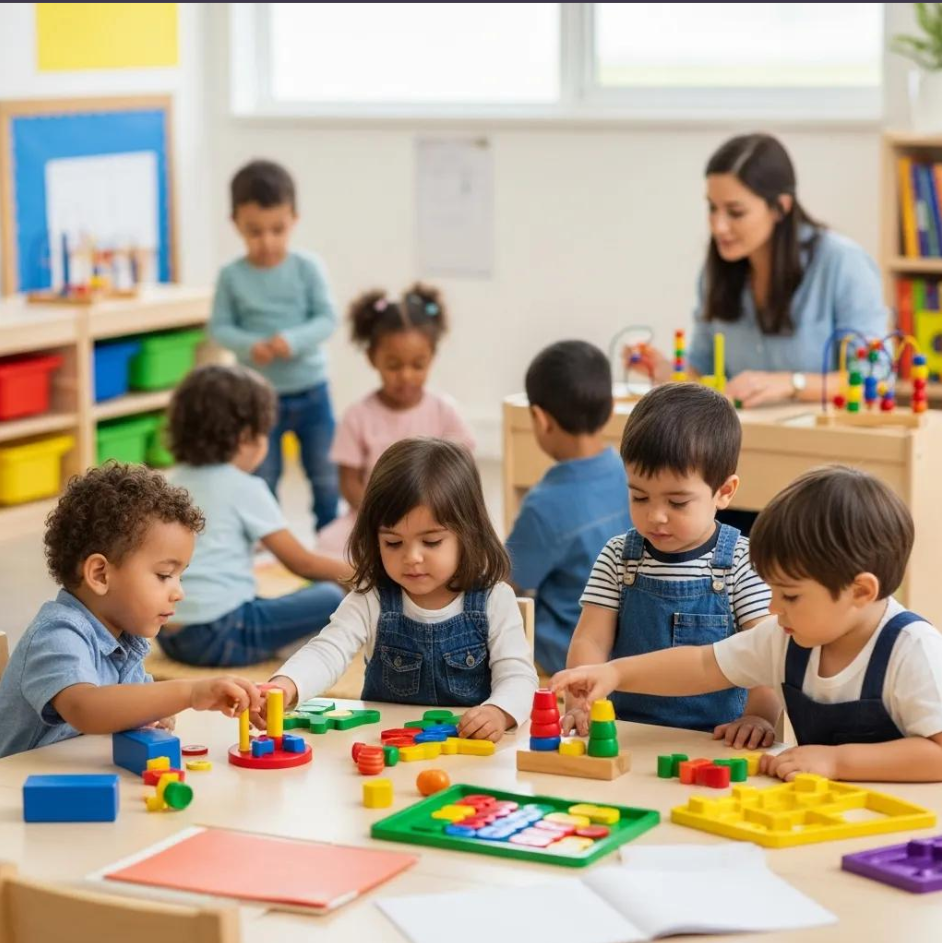
- Encourage Exploration: Offer activities that stimulate curiosity and learning, such as sensory bins, building blocks, and outdoor play. This helps children understand their world through direct experience and problem-solving.
- Foster Social Interactions: Create opportunities for children to play and interact with their peers and adults. Group activities, shared games, and structured playdates help them learn vital social skills like sharing, cooperation, and conflict resolution.
- Provide Emotional Support: Be attentive to children’s emotional needs and provide them with a secure, predictable environment. Acknowledging their feelings, teaching them coping strategies, and offering comfort helps build emotional intelligence and resilience.
What Educational Activities Promote Learning Through Play?
- Role-playing Games: Encourage creativity and understanding of social interactions by pretending to be doctors, teachers, or chefs. This fosters empathy and narrative skills.
- Artistic Activities: Stimulate personal expression and fine motor skills through drawing, painting, sculpting with clay, or crafting. These activities also boost creativity and self-confidence.
- Construction Games: Develop critical thinking, spatial reasoning, and problem-solving skills with LEGOs, wooden blocks, or magnetic tiles. Children learn about balance, structure, and cause-and-effect.
What Types of Childcare Services Exist and How to Choose Them?
What are the Differences Between CPEs, Daycares, and Family Childcare?
- CPE (Early Childhood Centers): Often government-subsidized in provinces like Quebec, CPEs offer structured educational programs for children, focusing on holistic development. They typically have larger facilities and a team of qualified educators, providing a consistent and regulated environment. While the term ‘CPE’ is specific to Quebec, similar regulated early learning and care centers exist in British Columbia, often referred to simply as licensed childcare centres.
- Daycares: These centers provide care and educational activities, with flexibility in schedules and services, varying by province. Daycares can be private or non-profit and often cater to a wider age range, offering diverse programs and facilities. In British Columbia, these are typically licensed group childcare facilities.
- Family Childcare: Childcare services offered by individuals in their own homes, often in small groups, regulated differently depending on the province. This option provides a more home-like, intimate setting, which some parents prefer for its personalized attention and flexible arrangements. In BC, these are known as licensed family childcare homes.
Skills and Qualities for Supporting Early Childhood Development
Conclusion
Frequently Asked Questions
How can I tell if my child is meeting developmental milestones?
While every child develops at their own pace, there are general guidelines for developmental milestones. You can consult resources from pediatricians, early childhood education websites, or government health agencies. If you have concerns, it’s always best to speak with your child’s doctor or a developmental specialist.