
In a city as fast-growing as Chilliwack, the landscape of childcare is changing rapidly. As new developments pop up from Sardis to Fairfield Island, the demand for childcare spaces has reached an all-time high. For many parents, the search for the right provider often starts with a simple Google search for daycare near me, but it quickly evolves into a much deeper quest: the search is essentially for a home away from home.
This was the exact journey of Julie, a local Chilliwack based mother. Julie wasn’t just looking for a facility for her son, Remy; she was looking for a specific kind of environment a smaller, in-home setting where Remy wouldn’t just be a face in a crowded room, but a child who was truly seen, heard, and nurtured.
When Julie found Cubs on Kent Daycare, she found more than just a convenient location. She found a partner in Remy’s development.
Julie’s Search for a Personal Environment
The search began with a clear set of priorities. Good location, close to home, and looking for a smaller in-home setting, Julie noted when describing what first drew her to our program.
For many children like Remy, who are in the 1 to 5 age range, the transition into a large, institutional daycare center can be overwhelming. The noise levels, the high number of transitions, and the sheer volume of peers can sometimes lead to sensory overload, making it difficult for a child to settle into a rhythm of learning. By choosing a smaller setting, Julie was prioritizing emotional safety.
In a smaller group, the Trust Bridge between the child and the educator is built much faster. There are fewer “social signals” for a toddler to decode, allowing them to focus their energy on what matters most: playing, discovering, and building confidence.
Confidence Through Communication
One of the most common anxieties parents face is the Day One drop-off. We often hear from parents like Julie who worry that their child isn’t ready for a full day of care or that the separation will be too abrupt. Julie shared that her confidence in choosing Cubs on Kent was solidified by our team’s willingness to listen and adapt to Remy’s specific needs.
“Good communication from staff and willing to work with us on easing into daycare, shorten days to start. Felt more personal than a larger daycare centre, get to know the staff better.” – Julie
At Cubs on Kent, we believe that the transition into childcare is not just a logistical step, but a biological one. Separation from a primary caregiver triggers a stress response in a child’s nervous system. To mitigate this, we utilize a Gradual Entry or Easing In process.
By starting with shortened days as we did with Julie and Remy we allow the child’s brain to learn a vital lesson: My mom leaves, but she always comes back. This predictable pattern of arrival, short-term play, and early reunion builds a foundational sense of security. When a child like Remy feels secure, his brain moves out of survival mode and into learning mode.
Remy’s Visible Progress
While the initial draw for Julie was the personal feel of the center, the long-term impact was measured in the developmental wins she observed at home. For a child in the toddler and preschool years, progress often happens in quiet, steady accumulations.
Julie was happily surprised by the specific skills Remy began displaying shortly after starting at Cubs on Kent.
1. The Power of Song and Literacy
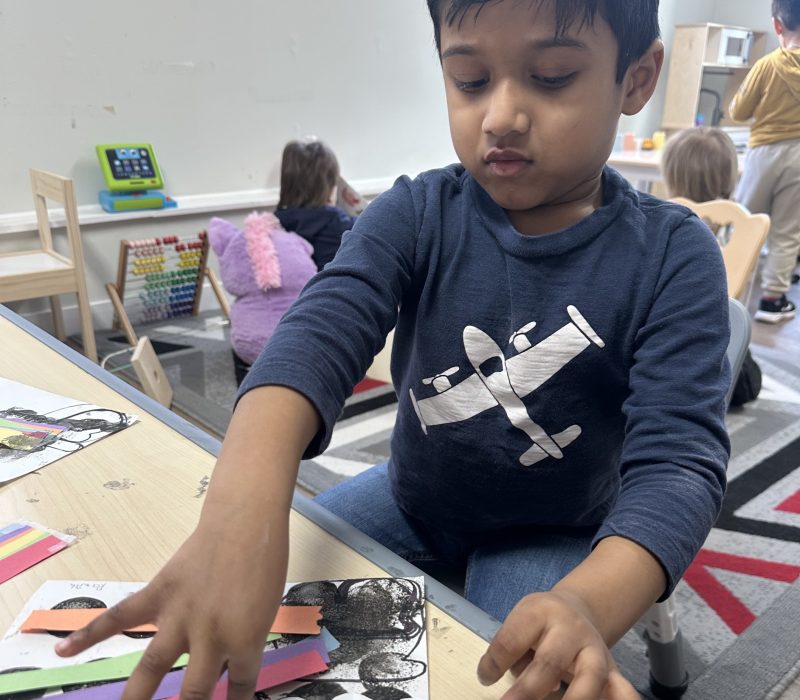
Learning the alphabet and early writing skills are major milestones, but they are most effective when taught through play and repetition. Julie noted: Remy is doing great with learning new skills… knowing a new song or working on his writing and alphabet.
In a smaller group, our educators can tailor literacy activities to a child’s specific interests. If Remy is interested in a specific animal or toy, we use those interests to count and identify letters. This individualized attention ensures that early academic concepts are greeted with excitement rather than pressure.
2. Improved SocialBehavior
Perhaps the most significant change Julie observed was in the realm of social interaction. His language and social behaviour with other kids really improved once he started, Julie shared.
Social development is a soft skill that actually requires a great deal of hard work from a toddler. It involves learning to share, understanding non-verbal cues from peers, and managing the frustration of waiting for a turn. In a smaller, team-led environment, our educators act as social coaches, stepping in at just the right moment to help Remy find the words he needs to express himself.
Why This Matters?
When we asked Julie what stood out most about her experience, her answer was simple yet profound: We do feel like the staff truly cares about Remy and takes great care of him when he is there.
This sense of being truly cared for is the result of our collaborative, team-led oversight model. In our smaller, personal settings, we ensure that a group of professional educators is involved in your child’s care. This doesn’t just provide a high level of safety and accountability; it ensures that your child has multiple professional relationships to rely on.
When a child like Remy loves his time there playing with his friends, it is because he feels emotionally safe. That safety is the ultimate Trust Bridge that allows a child to walk through our doors with a smile and leave with a new song in their heart.
Frequently Asked Questions (FAQ)
1. Why should I consider a smaller, in-home setting for my child in Chilliwack?
2. How does the Easing In process work for new families?
3. Will my child still learn academic skills in a smaller daycare?
Yes! Our play-based curriculum naturally integrates early literacy and numeracy. Because our groups are smaller, our educators can provide more focused support for milestones like letter recognition, writing, and language development through songs and guided activities.
4. How do you handle social development for toddlers?
We use a social coaching approach. By observing interactions closely in our smaller groups, we can help children find low-pressure ways to join in play, such as through shared puzzles or sensory activities, building their confidence one step at a time.
5. What makes staff communication at Cubs on Kent different?
We prioritize transparency and partnership. We believe that parents are the experts on their own children, and we work closely with you to ensure that the routines and emotional strategies we use at daycare align with what works for your child at home.