
When Navpreet, a Chilliwack-based parent, began searching online for childcare, she had a clear picture of what she was hoping to find – not just a safe place for her son, but somewhere he would genuinely be seen and supported. Agam was nearly three years old, and while he was a bright and curious child, he was having difficulty expressing himself verbally compared to other children his age. That gap, subtle as it might have seemed from the outside, sometimes translated into real frustration for Agam. He was also still learning how to manage his emotions – particularly during transitions or in moments when things didn’t unfold the way he expected.
For Navpreet, finding the right fit meant finding educators with patience, experience, and a genuine commitment to meeting children where they are. Her online search led her to Cubs on Kent Daycare, and what she found there turned out to be exactly what both she and Agam needed.
A First Visit That Said Everything
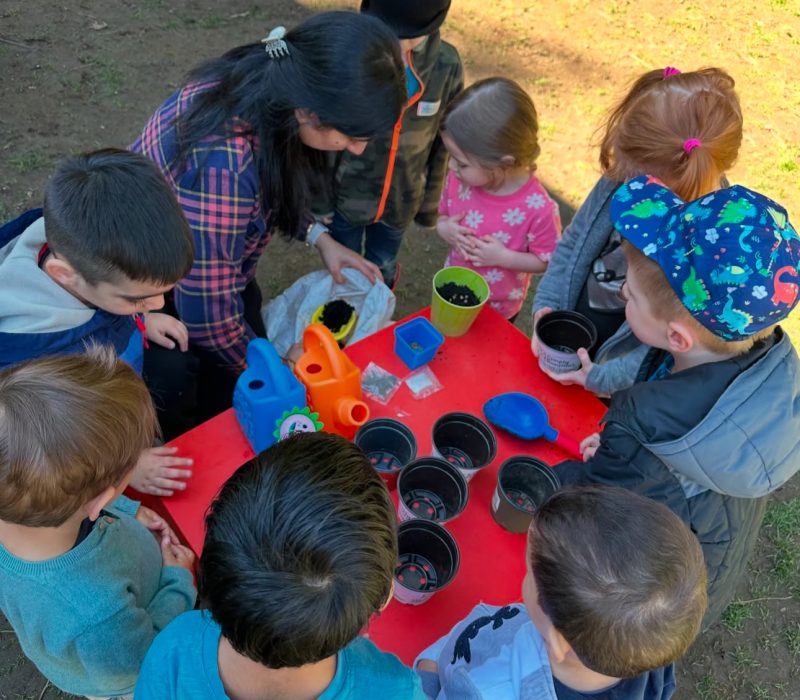
When Navpreet brought Agam for a walkthrough, the decision came quickly. The daycare’s atmosphere was clean, cozy, and immediately welcoming. The activities throughout the space were clearly age-appropriate – designed with young children’s developmental needs in mind, not just convenience. And the outdoor area stood out: generous, well-used, and purposeful. For a child who would benefit enormously from physical movement and open-ended play, it mattered.
Navpreet was searching for educators who would be patient, understanding, and experienced in supporting children through early developmental stages. The walkthrough made it clear that Cubs on Kent fit that description. By the time the visit ended, the decision had been made.
Starting Slow, on His Terms
Agam’s first weeks at Cubs on Kent were shaped by one deliberate principle: let him lead. The team resisted any urge to accelerate his integration into group activities or structured routines. Instead, they built the environment around his need to feel safe first – giving him room to explore at his own pace, without pressure, until familiarity could gradually become comfort.
When educators engaged with him directly, they were intentional about every interaction. They used simple language, gestures, and visual cues – approaches well-supported in early childhood research for building both speech development and emotional security. They worked with Agam to identify and name his emotions, using calm and consistent redirection in moments of frustration rather than correction.
The team also watched closely. They noticed early on that Agam participated more confidently in small-group settings and shaped their approach accordingly. A care plan was developed around his specific profile – not a generic framework, but something built around who he was – and that plan evolved alongside him as his needs changed.
Consistent routines became one of the most powerful tools in his progress. For a child who found transitions difficult, knowing what to expect – and receiving gentle, regular reminders of what came next – reduced anxiety and created steady space for growth.
The Progress That Built Quietly
Early childhood development rarely announces itself in dramatic moments. It accumulates in small, meaningful ways: a calmer response to a change in schedule, a word used where there had only been silence before, an emotion named and processed instead of expressed through frustration.
That steady accumulation is the story of Agam’s time at Cubs on Kent.
A critical part of that story is the partnership with Navpreet. The team worked closely with her throughout, ensuring that the language, routines, and emotional strategies used at daycare were also reflected at home. When parents and educators align, when a child hears the same words, follows the same rhythms, and experiences the same consistency in both environments – progress accelerates. Navpreet’s cooperation and trust in the team made an enormous difference.
Today, Agam is heading into kindergarten. He can recognize and write letters, numbers, and shapes. He navigates his emotions with a groundedness that would have seemed out of reach when he first arrived. The child who once struggled to express himself verbally is leaving Cubs on Kent ready for his next chapter.
What This Story Reflects
The Cubs on Kent team will tell you that caring for children is not a static skill. Every child teaches them something. Every new set of needs expands what the team understands about what thoughtful, responsive care looks like in practice. Agam’s story is one of those lessons – a reminder of what becomes possible when patience, consistency, and genuine investment in a child’s individual journey sit at the center of everything.
For families considering Cubs on Kent: what you’ll find is a team that takes the responsibility of early childcare seriously. Flexible hours of operation, a play-based learning philosophy, and educators who treat each child’s development not as a milestone to check off, but as a relationship to nurture. If you’re looking for a place where your child will be truly known – not just supervised – Cubs on Kent is worth a conversation.
Frequently Asked Questions (FAQ)
1. How does Cubs on Kent support children with communication or developmental delays?
2. How important is parent involvement in a child’s progress at daycare?
3. What does the transition process look like for new children joining Cubs on Kent?
4. Is Cubs on Kent suitable for children who struggle with emotional regulation?
Yes. The team is experienced in supporting children through emotional development. They use calm redirection, emotion labeling, and predictable routines – evidence-backed strategies that help young children understand and manage their feelings over time.